1-1-1. The Basic Pattern
Think about how you know when it’s about to rain - not through analysis, but through that immediate sense of darkening skies, shifting air, and gathering stillness. Living patterns reveal themselves similarly, through three distinct yet connected territories that we can learn to recognize in direct experience.
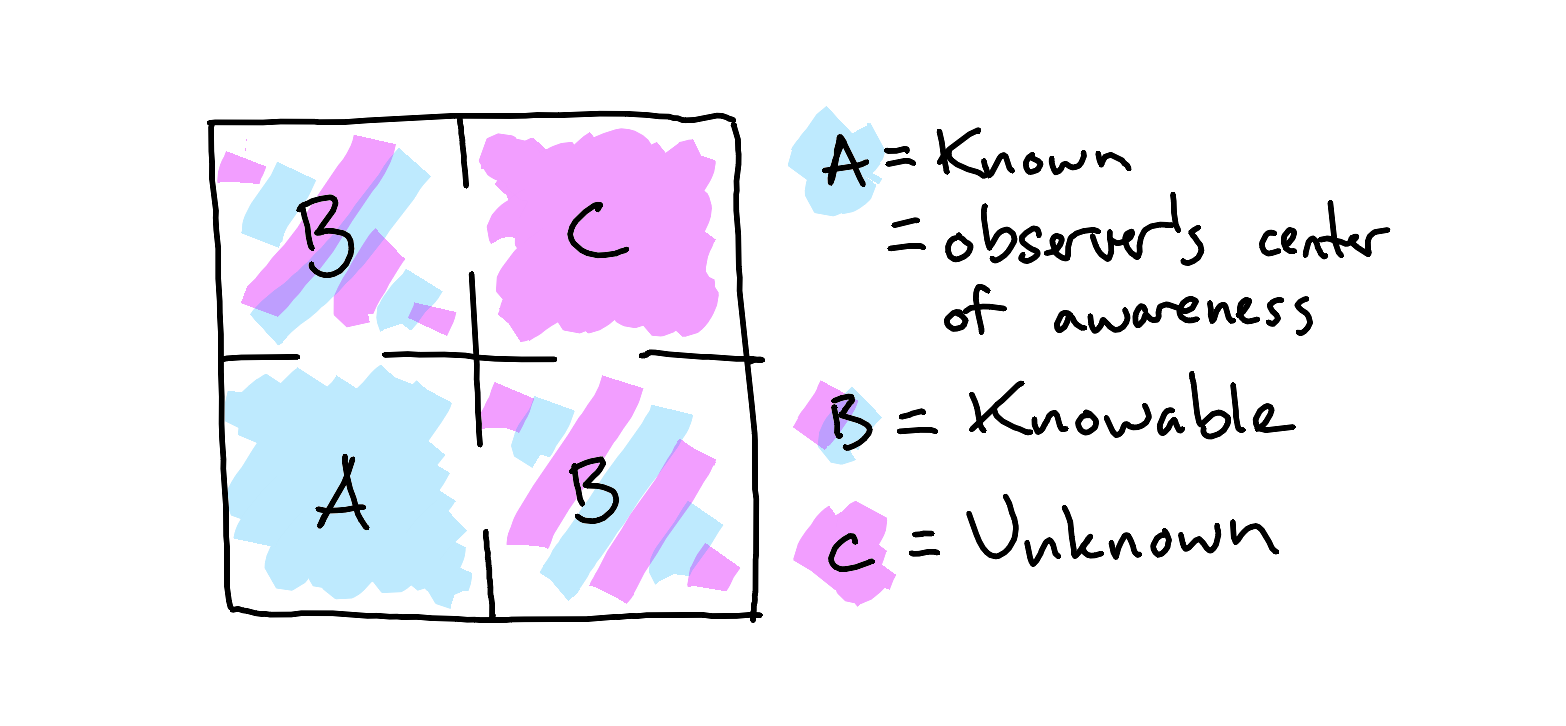
The Living Territories
Known (A)
Like solid ground beneath your feet:
- Unmistakable presence, like recognizing your own home
- Clear enough to trust but alive enough to evolve
- Stable without being rigid
- Your center of awareness
Knowable (B)
Like the edge where waves meet shore:
- Active territory between familiar and mystery
- Clear enough to engage but fluid enough to transform
- Responds directly to attention
- The living interface where evolution happens
Unknown (C)
Like the horizon at dawn:
- Not empty but pregnant with possibility
- Clear enough to sense its presence
- Source of all fresh patterns
- The well from which new life springs
State Transitions
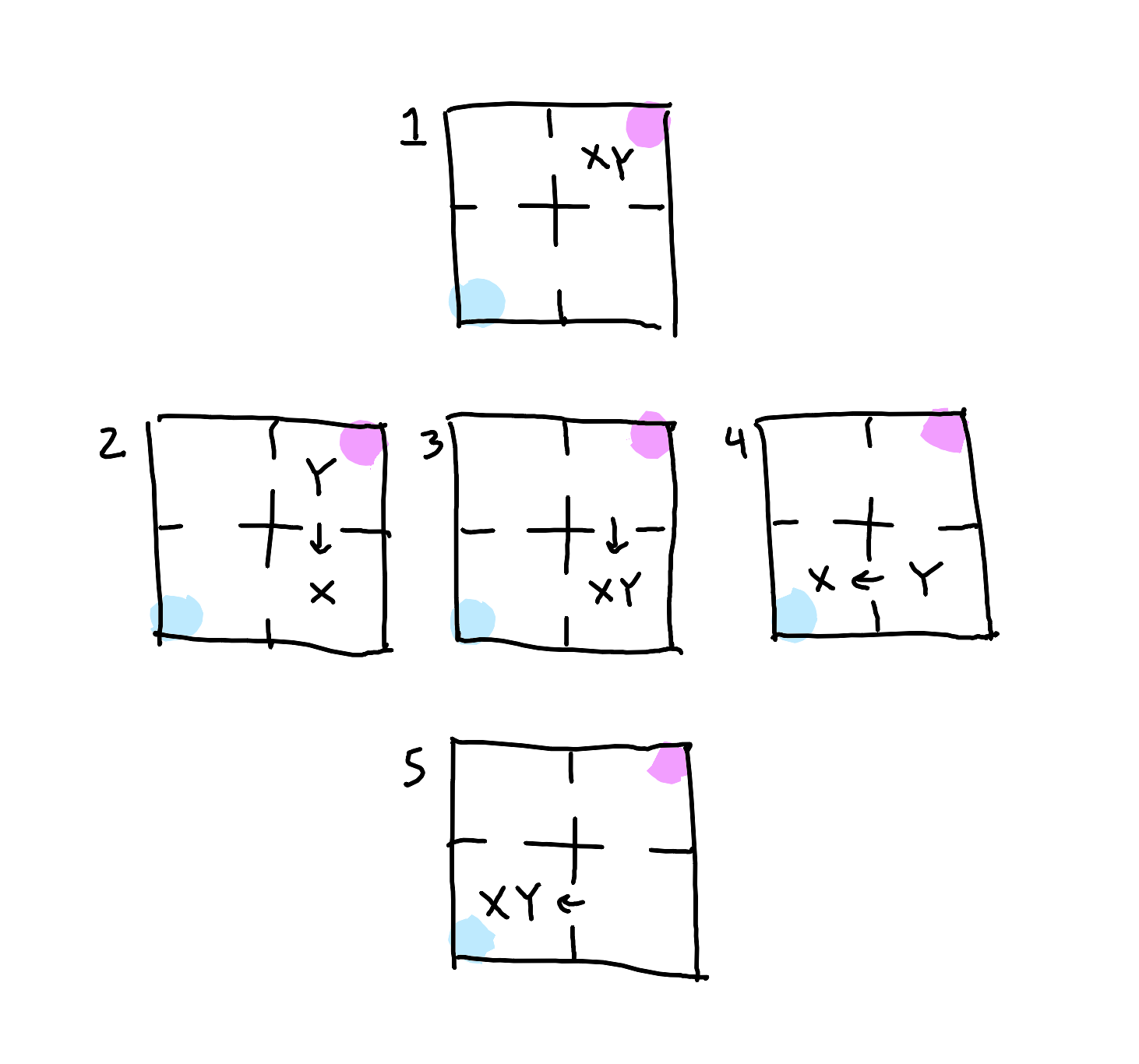
Watch how elements naturally move:
- From Unknown (C): Elements first appear together (CXY)
- Through Knowable (B): Elements become available to engage (BXCY → BXY)
- Into Known (A): Elements establish clear presence (AXBY → AXY)
Notice particularly:
- How elements maintain relationship while moving
- When transitions feel natural versus forced
- What enables smooth movement between states
- How probability fields form at territory boundaries
Recognition Through Texture
Each territory has its own unmistakable feel:
Known:
- Like familiar music - instantly recognizable
- Requires no effort to perceive
- Provides reliable reference
- Maintains living stability
Knowable:
- Like a word on the tip of your tongue
- Responds actively to attention
- Shows clear next steps
- Enables natural development
Unknown:
- Like the feeling before inspiration
- Not blank but full of potential
- Always yielding fresh patterns
- Maintains system vitality
Probability Fields at Boundaries
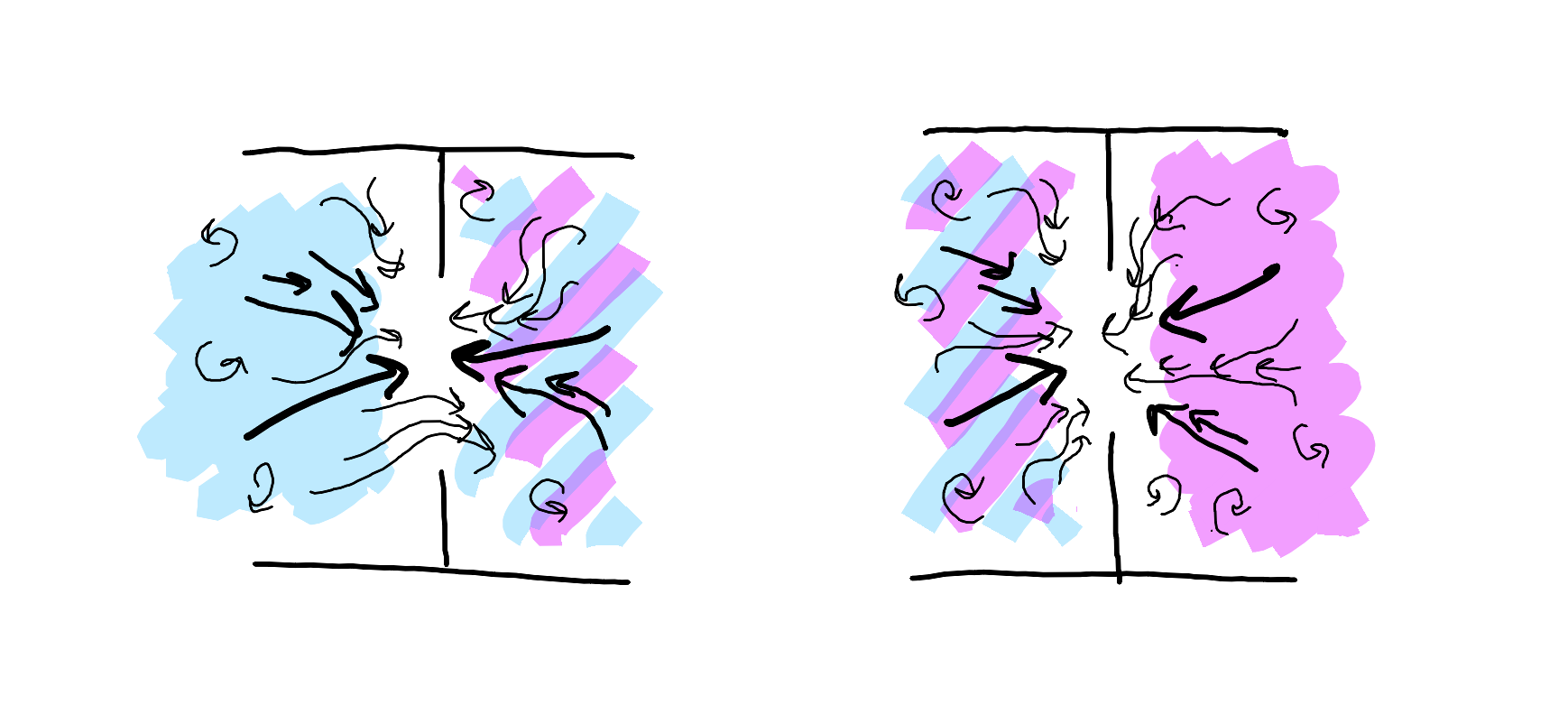
Notice how possibility gathers:
- Between Known and Knowable: Fields enabling exploration
- Between Knowable and Unknown: Fields ensuring freshness
- All boundaries remaining permeable
- Natural movement finding perfect path
Practice in Direct Experience
Try this simple exercise:
- Start with what’s unmistakably present (Known)
- Notice what naturally draws attention (Knowable)
- Sense what’s gathering beyond (Unknown)
- Feel how probability fields form at boundaries
- Trust the natural movement between territories
Remember: These aren’t separate zones but aspects of one living pattern. Like learning to read weather or water, understanding comes through direct experience rather than analysis.
The art isn’t in controlling territories but in recognizing their distinct textures and natural movements. Start with what’s actually present. Notice where probability gathers. Trust what emerges through their perfect dance.
Want to explore how these patterns apply to your work? I’d love to help. Come find me at lightward.com/pro 🎭✨